

Refugees did not create the housing emergency, but a dangerous narrative is taking hold regardless
21 February 2026
Decades of underinvestment, rising rents and shrinking social housing created this crisis. But as housing pressures grow, blame is being pushed onto the very people most harmed by the political failure.
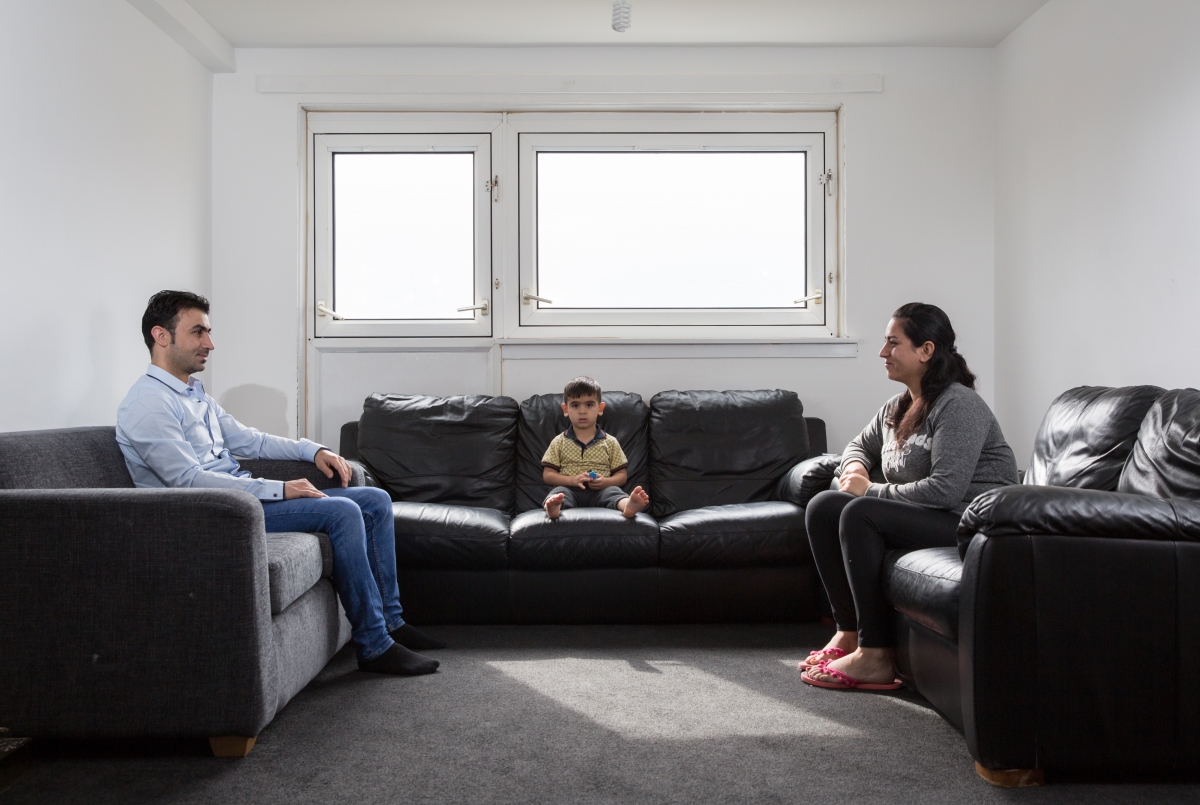
When Glasgow declared a housing emergency in November 2023, the homelessness crisis was already decades in the making.
The city lost tens of thousands of social homes after stock transfers and demolitions. New supply never kept pace with demand.
Historically, Glasgow has had one of the highest homelessness rates in Scotland. Even before 2020, the council struggled to meet its legal duty to provide temporary accommodation.
In 2018–2020, Shelter Scotland took Glasgow City Council to court for systemic failures in providing temporary accommodation. The Scottish Housing Regulator intervened in 2020 because the council was breaching homelessness law on a large scale. So no, things were not fine.
By the time the housing emergency was formally declared, homelessness demand was already high and the system was operating with almost no spare capacity.
What changed in 2025 was the way the crisis was reported. The council began foregrounding refugee related statistics in its public messaging, and that shift was when a racist narrative entered the mainstream.
We raised our concerns about racialised framing with the Council on 9 July. Here is a short excerpt:
“In recent months, far right groups in Glasgow have openly blamed refugees and asylum seekers for the billions spent by the UK government on asylum contracts. This follows press reports from April 2025 quoting the Council’s warning that the asylum system risks ‘damaging social cohesion’ in Glasgow. Such language risks drip feeding a racialised narrative… providing fertile ground for hostile actors to scapegoat vulnerable communities… and risks stoking racism and hostility…”
The council’s reply in September 2025 was lengthy and marked private, our concerns were effectively dismissed. But our argument stands. Refugee related figures have to be set alongside overall homelessness pressures, the larger proportion of non refugee households who are also creating pressures, and the long term structural failures to supply new homes. Without that context, the messaging ends up reinforcing a racist narrative even while denying it. What we are seeing now, in how housing shortages are being weaponised by the far right, confirms we were right to raise the alarm.
Ukrainians were treated differently, arriving through bespoke humanitarian schemes rather than the asylum system, yet many still ended up homeless when hosting placements collapsed. Their homelessness was understood as a failure of government planning, not a demographic threat, in stark contrast to the way refugee homelessness was framed in 2025.
The nuance, the 28 day move on rule, the Home Office’s use of insecure immigration statuses that turn job loss into homelessness, the collapse of Ukrainian hosting placements, the backlog clearance, and the long term erosion of social housing, all disappeared. What remained was a simple, combustible story: refugees are overwhelming services. It travelled quickly, repeated by other councils, echoed in regional papers and seized upon by political actors eager for a grievance.
The Glasgow Times did push back. On 19 June 2025, its political correspondent published a clear fact check explaining that refugees do not get priority for social housing. This intervention stood alone. The wider media continued to amplify the idea that the crisis was driven by the presence of refugees rather than by the policies that produce homelessness in the first place.
Into this environment came the Shelter Scotland and CRER report, Systemic Racism and the Housing Emergency, published on 12 December 2025. Its findings were important, but its timing and framing were unfortunate. Without meaningful engagement with BME led organisations in Scotland, the research landed in a debate already primed for misinterpretation. Instead of clarifying the structural drivers of inequality, it risked being read as confirmation of the very story that had taken hold.
On 16 December 2025, Scottish Housing News published a deeply troubling response to the research from within the housing sector:
"On access to housing, our members feel in a particularly surreal situation. They have Shelter telling them they need an anti racism policy, but are regularly having to explain to long standing housing list and transfer applicants why an increasing proportion of homes are being allocated to refugee and other homeless households. Associations can’t, of course, influence the ethnicity of any homeless applicants, but we do know that at the current time, a significant proportion are refugee households... Community based associations will explain things to people as factually and responsibly as they can, but let’s not pretend that tensions don’t exist around this issue in our communities."
Since recognised refugees have the same housing rights as UK citizens, why single them out? Why would you be explaining why refugees are getting housed? What does their ethnic background have to do with it? The uncomfortable truth is that if a housing association would not feel compelled to explain why a white homeless household was allocated a property, then the need to explain it when the household is Black or brown reveals a deeper problem.
And this was not happening in a vacuum. Just days earlier, on 10 December 2025, The Herald reported Nigel Farage claiming that asylum seekers were being prioritised for housing in Glasgow, the familiar "illegals jumping the housing queue" line that Reform UK has been pushing across the UK. Yet by failing to challenge the same assumptions, housing providers risk giving that narrative legitimacy. Once normalised, it becomes acceptable. The work of the far right is done for them, and the consequences will only escalate. Exactly as we predicted in July.
We see the consequences every day. Forced dispersal, dawn raids, destitution, families left with nowhere to go. We built the Room for Refugees hosting network and an Emergency Relief Fund because the system keeps producing emergencies. We know how the housing system works, and how it fails, because we are dealing with the fallout in real time.
“Refugees welcome” - while welcome, does not quite cover it. We need housing equity and jobs for a section of our society with almost no lobbying power, who have accepted inequality as the norm, and who are increasingly afraid to speak up because Home Office policy keeps refugees and immigrants permanently temporary in this country.
The deeper problem is that Scotland’s housing sector still does not reflect the communities it serves. Scotland is good at not talking about that. In a Scotland where almost 12% of the population is minority ethnic, and in Glasgow where that figure is 23%, the sector remains overwhelmingly white at senior levels. When we first raised this debate 34 years ago, Scotland’s ethnic minority population was 2-3%. The debate was light years ahead then. If an organisation were entirely male at the top, we would not accept “grappling” as an explanation. We would call it structural exclusion. The same standard must apply here.
Meanwhile, the structural drivers of the housing emergency remain unaddressed: the long term decline of social housing, the 28 day rule that forces newly recognised refugees into homelessness, the Home Office’s use of temporary immigration statuses that turn job loss into destitution, and an outsourcing economy that profits from their instability. These are political choices. They can be changed.
But if we continue to legitimise the wrong assumptions, whether through careless messaging, uncritical headlines or defensive commentary, we will deepen the housing crisis and empower those who thrive on division. We will create the conditions for a political lurch that harms the very communities already bearing the brunt of political failure. That is not just irresponsible. It is an act of collective self harm. With the May 2026 elections approaching, the danger is not theoretical. It is immediate.
Robina Qureshi