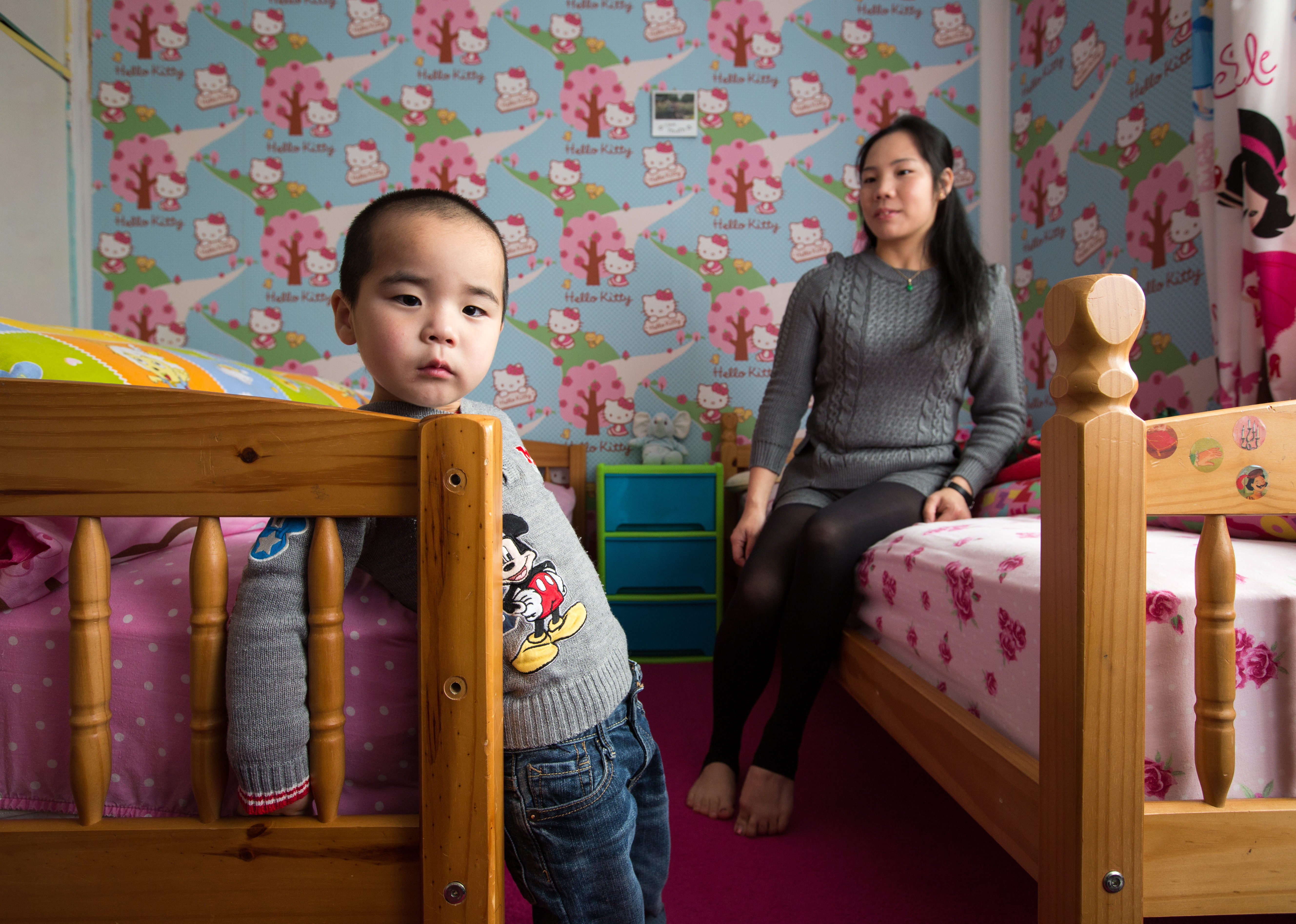

Home Office challenged in Court of Session over failure to enable Palestinian refugee family to leave Gaza
29 October 2026
Aidan O’Neill KC questioned how the UK Government can grant exceptional assistance to a mother and son while withholding the means to actually get them out.
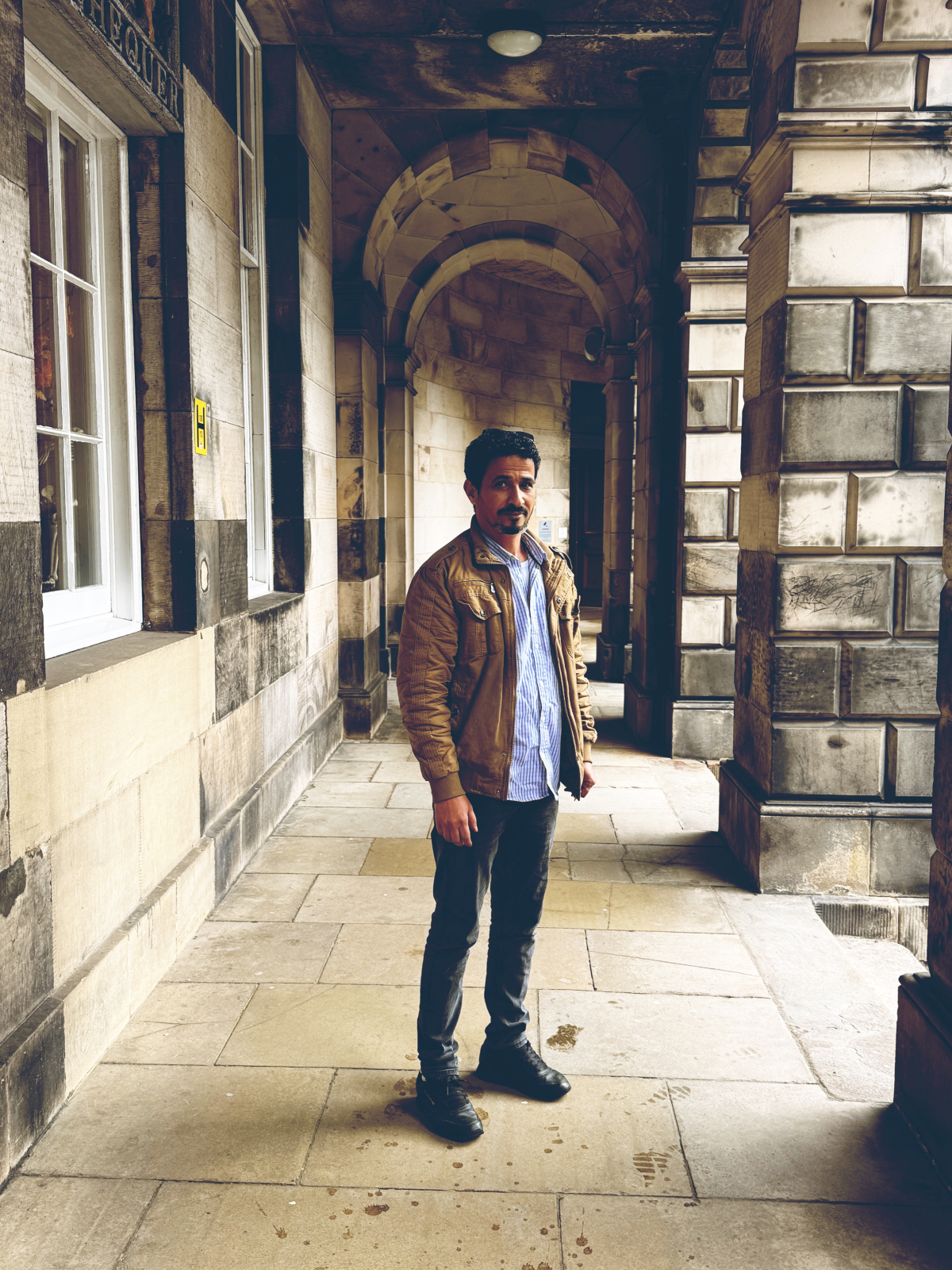
Zakaria has taken his fight to save his wife and children’s lives in Gaza to Scotland's highest court.
Positive Action in Housing was at Scotland’s Court of Session on Thursday 29 October to support our client, Zakaria, a recognised Palestinian refugee living in Scotland who is fighting to bring his wife and three sons to safety from Gaza.
Zakaria's two older sons were refused permission to join him in the UK. Their refusals are currently being appealed by a different Scottish lawyer. His wife and youngest son received favourable family reunion predeterminations on 9 October 2025, subject to biometric enrolment. Yet they remain trapped in Gaza, unable to reach the visa application centre where those checks must take place.
Zakaria is represented in the current Court of Session proceedings by Euan MacKay of McGlashan MacKay Solicitors, with Aidan O’Neill KC and Bilal Shabbir, advocate, presenting the central legal arguments.
On the second day of submissions before Lord Renucci, the Home Office acknowledged that the Foreign Office cannot practically help the mother and youngest son reach Jordan without a UK "onward travel assurance".
The Foreign Secretary had already decided in June 2026 to provide "exceptional consular assistance" for their departure from Gaza. But the Home Office has yet to provide the assurance required by Jordan to allow them to travel through the country and complete their biometric checks.
Aidan O’Neill KC challenged the Government’s interpretation of that decision, arguing that the UK Government cannot meaningfully commit to helping this family leave Gaza while maintaining that it has not decided whether to provide the only available means of doing so.
A Government commitment under scrutiny
The Home Office argued that granting consular assistance and providing onward travel assurance are separate decisions, involving different responsibilities and security considerations.
Mr O’Neill challenged that distinction. He argued that the UK Government is one legal decision-maker for these purposes and that the Foreign Secretary’s decision must be interpreted as a meaningful commitment in the circumstances in which it was made.
On the Home Office’s interpretation, the Government had agreed to help the family leave Gaza through Jordan but had not decided whether to provide what was necessary to make that assistance possible.
Mr O’Neill argued that this made the Government’s interpretation of its own June letter internally contradictory.
“On the one hand, you're giving the assistance, on the other hand, actually, we're not. So the letter is doing nothing ... There's no consular assistance to get them out of Gaza into Jordan that can be given on his reading. So when they say they're doing it, they're also saying they're not doing it.”
And with that, Mr O'Neill established the central constitutional argument: a commitment made by the UK Government cannot be interpreted in a way that deprives it of practical effect.
Lord Renucci explored the point, while also asking whether consular assistance and onward travel assurance could be different stages of one overall decision-making process.
“...What I'm saying, to paraphrase what you're saying, they're saying, ‘We will help you get out of Gaza. We will do that, but only if we then decide to give you the mechanism to get you out of Gaza."
"Yes," replied Mr O'Neill
“The mechanism being the OTA.” asked Lord Renucci
“Yes. And which only they, the UK government can provide.” Mr O’Neill KC replied.
Challenging the Government’s evidence
Mr O’Neill also questioned the Government’s account of its own decision-making arrangements.
In earlier proceedings before Lord Braid, the Government had described a coordinated approach between the Foreign Office and Home Office, which was relevant to its explanation for delays.
However, the June 2026 correspondence showed that the Foreign Secretary made the assistance decision and subsequently asked the Home Office to consider onward travel assurance.
Mr O’Neill challenged the evidential basis for this apparent departure from the process previously described to the court.
The Home Office maintained that the difference in procedure did not determine whether an onward travel assurance was legally required. The court made no finding that the Government had misled earlier proceedings.
Security checks and the biometric deadlock
The Home Office argued that an onward travel assurance could effectively commit Britain to receiving the family even if biometric checks in Jordan subsequently identified security concerns.
Lord Renucci pressed Mr O’Neill on that consequence, observing that the assurance would carry practical obligations beyond simply reaching a biometric centre.
Mr O’Neill distinguished the assurance to Jordan from a final immigration decision, while acknowledging that onward travel to Britain would be the foreseeable outcome.
He also highlighted the central obstacle: the family cannot complete biometric checks without reaching Jordan, but cannot reach Jordan without an assurance from the Government requiring those checks. In his words:
“But of course, they can't do the biometrics unless they get the OTA [Onward Travel Insurance]. So one blocks the other, basically ... There's no further security information that can be obtained other than has already been obtained to get consular assistance for the decision on whether to grant OTAs. And it's only once you're in Jordan that you can then do the biometric check.”
And this is the clearest statement of the family reunion trap. The family must complete checks to progress, but the Government is withholding the mechanism needed to reach the place where those checks can be completed.
Mr O’Neill also highlighted the central obstacle: the family cannot complete biometric checks without reaching Jordan, but cannot reach Jordan without an onward travel assurance from the UK Government.
He argued that the Government could not promise to assist the family out of Gaza while refusing to provide the mechanism necessary to make that assistance effective.
In his concluding submission, Mr O’Neill returned to the Government's June decision:
“The letter of the 15th of June is either a nonsensical non-commitment to doing anything, or it means getting into the UK.”
A wider problem facing Palestinian families
In December 2024, the Home Office confirmed that it had granted 143 predetermination requests and five biometric-excusal requests to Palestinians in Gaza since October 2023.
These figures do not establish how many people subsequently completed biometrics, obtained final visas or reached the UK.
The Home Office's published family reunion statistics count applications only after biometric enrolment. Families unable to leave Gaza to provide biometrics may therefore be missing from those totals, even where favourable predeterminations have been issued. What remains unknown is how many Palestinian family members with favourable predeterminations have actually completed biometric checks, obtained final visas, left Gaza and reached the UK. No comprehensive published Government figure has been identified. This means the published statistics cannot establish whether family reunion is functioning for people unable to access biometric facilities.The obstacle facing our client is part of a wider, documented problem.
Positive Action in Housing’s internal casework review identified 79 family-reunion-related records, representing approximately 64 distinct sponsors or households, alongside reports of at least 65 relatives reported killed across approximately 14 separate cases.
“A promise of assistance must mean something”
Robina Qureshi, CEO of Positive Action in Housing, said:
"When we arrived at Parliament House, I thought back to 2022, when the UK opened safe routes for some 240,000 Ukrainians fleeing war, allowing many to travel without first providing biometrics. Yet when it comes to Palestinians, here we were, in Scotland’s highest civil court, supporting a single family fleeing genocide in Gaza who are being forced to seek legal intervention simply to have the chance to reunite with a loved one already living here.
"Aidan O’Neill KC exposed the contradiction at the heart of this case. The UK Foreign Office agreed to help a mother and child to leave Gaza to submit their biometrics, but the Home Office has not provided an onward travel assurance, without which they cannot enter Jordan to submit those biometrics.
“Zakaria is a recognised refugee in Scotland. His two older sons are appealing refusals, while his wife and youngest son remain trapped despite favourable preliminary decisions.
"This has been going on for over a year, this family are not in a safe zone, they are living in a torn tent in Gaza under daily bombardment, where civilians are being killed, injured and repeatedly displaced as the Yellow Line encroaches on more of Gaza's territory.
"In September 2025, a United Nations Independent International Commission of Inquiry formally concluded that Israel had committed four out of five genocidal acts defined under the 1948 Genocide Convention, including killing Palestinians, causing serious bodily or mental harm, deliberately creating conditions of life intended to destroy the population, and imposing measures intended to prevent births.
"The Commission also concluded that there was evidence of genocidal intent and called for the genocide to end and those responsible to be finally held accountable.
"Yet families whose refugee family reunion applications have received favourable predeterminations remain trapped in Gaza, unable to reach the biometric centres required to complete their applications.
"At the same time, the validity of their predeterminations is at risk of expiring, and have expired, and people have been killed waiting inside a killing zone that is deadly for civilians and has no ceasefire.
"Contrast that with the treatment that Home Office gave to Ukrainians fleeing war. In March 2022, the Home Office specifically changed its IT systems to allow eligible Ukrainians fleeing war to travel to the UK and complete biometric enrolment up to six months after arrival. Hundreds of thousands of people subsequently arrived under the wider Ukraine schemes. This demonstrates that the Home Office has previously adapted its biometric requirements in a humanitarian emergency.
"The same flexibility has not been extended to families trapped in Gaza who have rights to join their families, and are fleeing what the UN Independent International Commission of Inquiry are calling genocide. This family desperately want to cooperate and submit their biometrics, but the British government must enable them to leave Gaza in order to do it. Our clients are merely asking for a safe, workable way to enter Jordan, submit biometrics, then travel onwards to the UK after getting clearance to travel. It was done for Palestinian students and medical cases. Do the same for the families. They have already received favourable predeterminations confirming their eligibility in principle to enter the UK. Biometrics are the remaining steps. Eligible Ukrainians were permitted to complete their biometrics up to six months after arriving in the UK. Otherwise, the situation really does reek of double standards and the collective penalisation of Palestinian families. We dread the waiting as the situation deteriorates in Gaza. This is this family's last thread of hope."
What happens next?
Lord Renucci has not yet ruled on whether the Home Secretary is legally obliged to provide an onward travel assurance. The Home Office’s decision on that assurance remains outstanding.
A further hearing is arranged for 12 November 2026 to address evidence and possible cross-examination, with substantive proceedings due to continue on 27 November 2026. Anyone who wishes to support this family and attend Court can contact Positive Action in Housing.
For Zakaria and his family, the position remains unchanged: a favourable preliminary family reunion decision, a Government commitment to provide exceptional assistance, yet no workable route out of Gaza.
*Quotations are based on contemporaneous notes taken during the Court of Session hearing on 29 October 2026.
Sources
Earlier Court of Session judgment, A and B, Petitioners [2026] CSOH 41
Home Office parliamentary answer, December 2024
Home Office family immigration statistics, August 2026
Official parliamentary source on Ukrainian visas (10 March 2022)